Ceramic Implants
Ceramic (zirconia) implants are white-colored tooth root substitutes made from zirconium dioxide. They do not contain titanium and are known for their high biocompatibility. They are usually preferred by patients who have metal allergies or who care a lot about aesthetics.
Implant technologies used for treating missing teeth are developing quickly. Ceramic and zirconia implants, in particular, stand out in terms of aesthetics and compatibility with the body. Ceramic implants, when suitable, are used by Dentince specialists to help restore both the health and appearance of teeth. They are placed into the jawbone like a screw, fuse with the bone, and then a prosthetic tooth is placed on top to create a natural look.
What Is a Ceramic Implant and How Is It Applied?
A ceramic implant is a type of implant placed into the jawbone to act as a tooth root, and it does not contain metal. It is usually made from a strong ceramic material called zirconia (zirconium dioxide).
The process of placing ceramic implants is very similar to traditional titanium implants.
The steps are generally as follows:
Examination and Planning
The dentist evaluates the patient’s oral structure, jawbone density, and tomography results.
Local Anesthesia
After planning, local anesthesia is applied to the area so the patient does not feel pain.
Implant Placement
The zirconium dioxide ceramic implant is placed into the prepared area in the jawbone.
Healing Process
Time is given for the implant to fuse with the bone. The healing time depends on the patient’s overall health and the quality and density of the bone.
Prosthetic Stage
After the area has healed, ceramic crowns (tooth coverings) are placed on the implants and the treatment is completed.
What Material Are Ceramic Implants Made Of?
Ceramic implants are made from zirconium dioxide (zirconia), which is a strong, white, metal-free material. It is very compatible with human tissue. Because it looks natural, does not cause allergies, and works well with the gums, it is often preferred.
What Is the Difference Between Ceramic and Titanium Implants?
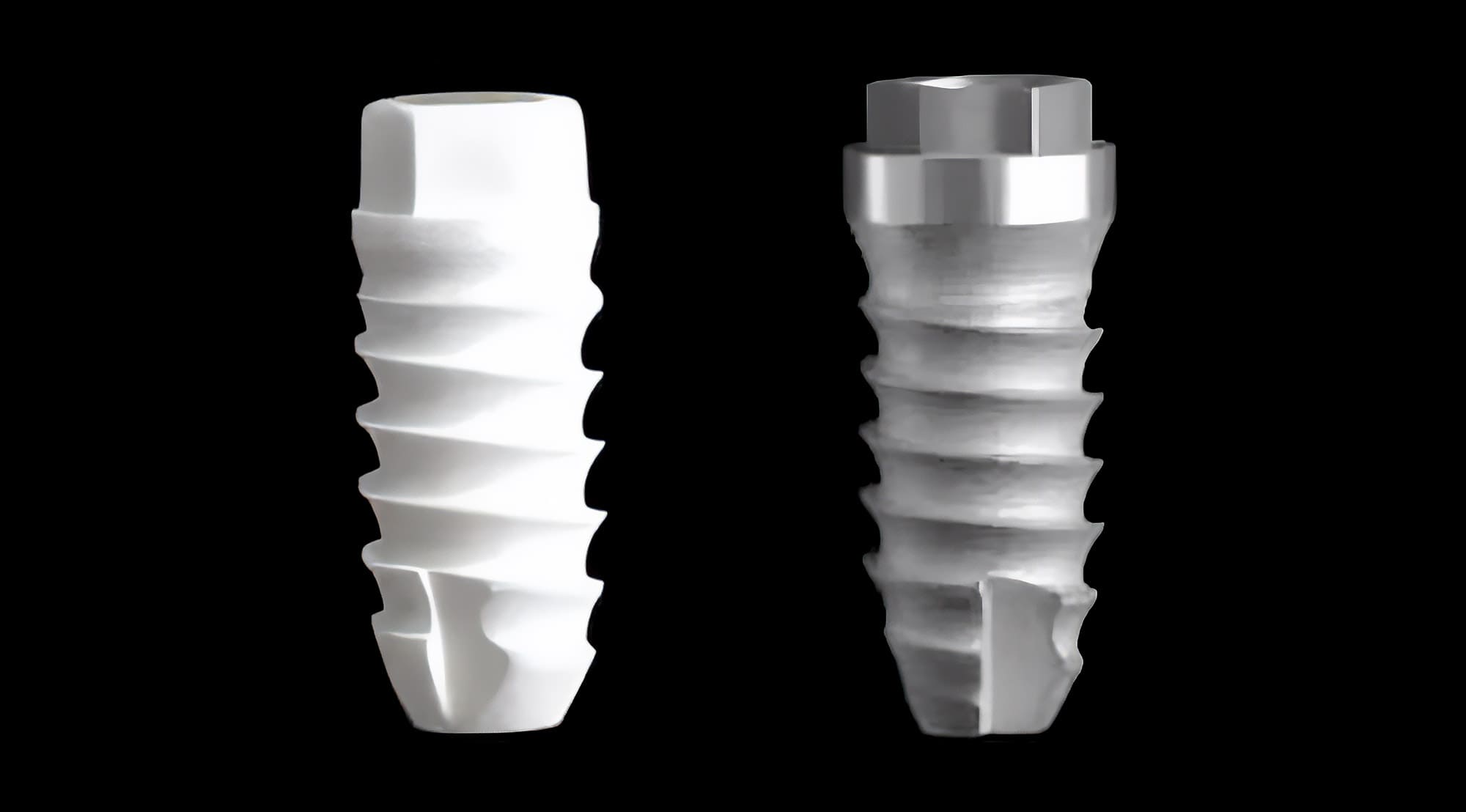
The main differences between these implants are related to aesthetics, allergy risk, and how they interact with tissue.
Titanium implants are considered the standard because they are very strong and have proven long-term success (15–20 years or more). Ceramic implants, on the other hand, are white, do not contain metal, and are a good option for patients with allergies or for those who want a more aesthetic result.
Which Implant Has Better Tissue Compatibility?
Titanium has a very low risk of allergy, but some patients may still have sensitivity to metals. Ceramic (zirconia) implants do not contain metal, are more tissue-friendly, and tend to integrate well with the gums.
It is also known that ceramic surfaces collect less plaque and bacteria compared to titanium. This can be an advantage for gum health.
Why Are Ceramic Implants Preferred? What Are the Advantages?
Ceramic implants are especially preferred by patients looking for a more aesthetic or biological (holistic) approach.
Some of the main advantages are:
No Risk of Metal Allergy
Since they are made from zirconium and do not contain metal, they are a safe option for patients with titanium allergies.
Natural Appearance
Because they are white, they do not create a dark reflection at the gum line like titanium can. This is especially important for front teeth.
High Biocompatibility
They are very compatible with body tissues and integrate well with the gums.
Low Plaque Accumulation
Their surface is smoother compared to titanium, so less plaque and bacteria tend to build up.
Strong Structure
Zirconia is a hard material, so it is resistant to chewing forces and can last a long time.
Tissue-Friendly
They support gum health and are known to be gentle on surrounding tissue.
Do They Provide a Natural Tooth Appearance?
Ceramic (zirconia) implants provide a very natural look because of their white color. They do not create a grey shine at the gum line, especially in patients with thin gums or in the front tooth area.
They also reflect light in a similar way to natural teeth, which makes them look more real. They are resistant to bacteria, so they can maintain their appearance over time.
How Is Gum Compatibility?
Ceramic implants are very close to natural tooth roots in terms of structure. They are:
- Compatible with the gums
- Do not cause discoloration
- Do not lead to darkening or bruising
The gums can adapt around the implant in a natural way, helping to maintain healthy tissue.
Lifespan of Ceramic Implants
With good oral hygiene and regular dental check-ups, ceramic implants can be used for 15–20 years or even longer. In some cases, they can last a lifetime.
Even if the implant itself remains strong, the crown placed on top may wear out or crack after 10–15 years. In such cases, the crown can be replaced.
What Affects the Lifespan?
The lifespan of ceramic implants depends on several factors:
- Oral hygiene
- Smoking
- Bone density and quality
- Surgical technique and experience
- Implant design and diameter
- Chewing habits (such as teeth grinding)
- General health conditions (like diabetes)
How Can I Start The Process?
If you are ready to start the journey towards a life-changing smile, contact us to schedule a free consultation today!
Are Ceramic Implants Safe?
Ceramic implants are considered a safe modern option because they are tissue-friendly, have a low allergy risk, and are aesthetic. They are especially suitable for patients with metal allergies.
Will the Body Reject Them?
Ceramic implants are not rejected by the body in the same way as organ transplants. Since they are made from biocompatible materials, the body does not see them as a threat.
However, failure can still happen, which is usually related to treatment issues rather than rejection. These may include:
- Infection
- Poor oral hygiene
- Smoking
- Excessive pressure on the implant
- Insufficient bone support
Is There a Risk of Allergy?
The risk of allergic reaction to ceramic implants is extremely low. Since they are metal-free and biocompatible, they are a good option for patients with metal sensitivity.
Are There Any Risks?
Like any surgical procedure, ceramic implants also have some risks.
Ceramic materials are hard but slightly more brittle than titanium, so there is a small risk of fracture, especially in areas with strong chewing forces.
The integration with bone can sometimes be slower compared to titanium.
There is also a general risk of infection, as with any surgery. Proper planning and professional treatment help reduce these risks.
Who Are Ceramic Implants Suitable For?
Ceramic implants are suitable for patients who:
- Have metal allergies
- Want a more natural look, especially in the front teeth
- Have thin gum tissue
- Prefer a holistic, metal-free treatment approach
Are They Suitable for Everyone?
They are not suitable for every patient. They may not be recommended for:
- Patients with uncontrolled diabetes or high blood pressure
- Cases with very low bone volume where grafting is not possible
- Patients using certain medications that affect bone healing
Ceramic or Titanium: Which Is Better?
Titanium implants are still considered the gold standard because of their long-term success and strength.
Ceramic implants are a good alternative for patients who want metal-free treatment or better aesthetics.
They are not direct competitors, but options for different needs.
When Should Each Be Preferred?
Titanium implants are preferred in:
- General cases
- Areas with strong chewing forces (back teeth)
- When a more cost-effective solution is needed
- Cases with limited bone volume
Ceramic implants are preferred in:
Patients with metal allergies
Front tooth areas where aesthetics are important
Patients with thin gums or risk of gum recession
Patients who want a completely metal-free option
Healing Process After Ceramic Implants
The healing process is similar to titanium implants.
First 48 Hours
Mild pain, swelling, and slight bleeding are normal. These usually peak in the first 48 hours and then decrease. Eating or drinking should be avoided for the first 2 hours, and soft, warm foods are recommended afterward.
First 1–2 Weeks
The gums heal during this time. Stitches are usually removed within 7–10 days or may dissolve on their own. Oral hygiene is important, but the area should not be brushed aggressively. Smoking should be avoided.
Long-Term (Bone Integration)
It usually takes 3 to 6 months for the implant to fully fuse with the bone. After that, the permanent ceramic tooth is placed.
Ceramic Implant Process at Dentince
At Dentince, the ceramic implant process includes examination and tomography, placement of a metal-free zirconia implant, a healing period of 3–6 months, and placement of a ceramic crown.
The treatment plan is personalized based on medical history, medications, and aesthetic expectations.
What Affects the Cost of Ceramic Implants?
Ceramic implants are generally more expensive than titanium implants. The cost can vary depending on exchange rates, material quality, and how complex the treatment is.
Additional procedures such as bone grafting or sinus lifting may also increase the cost.
How Can I Start The Process?
If you are ready to start the journey towards a life-changing smile, contact us to schedule a free consultation today!